Dream Nest System
Speculating on a Future of Targeted Dream Incubation
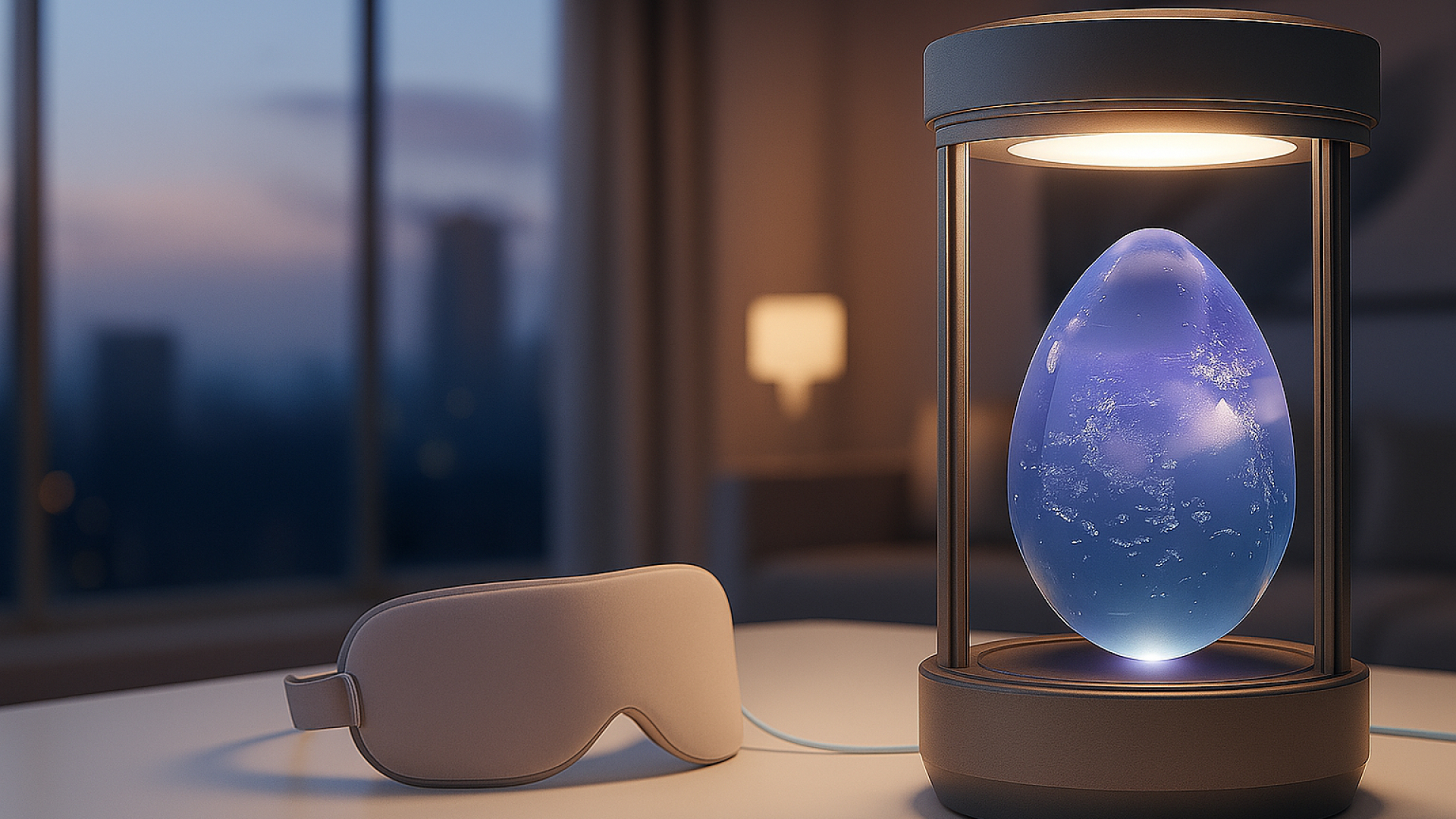
Dream Nest System is a speculative product and service concept that explores a near-future world where dreams can be designed, purchased, and experienced through Targeted Dream Incubation technology. The project imagines a branded system that allows users to insert a physical “Dream Egg” into a home incubator and wear a smart sleep mask to access curated dream experiences during sleep.
The concept uses a fictional commercial product to question how future technologies may reshape rest, desire, memory, and emotional escape. Instead of presenting dream technology as purely positive, the project examines its possible risks, including dependency, corporate control, class-based access, and the commercialization of sleep, dreams, and personal emotional experiences.
Project Overview
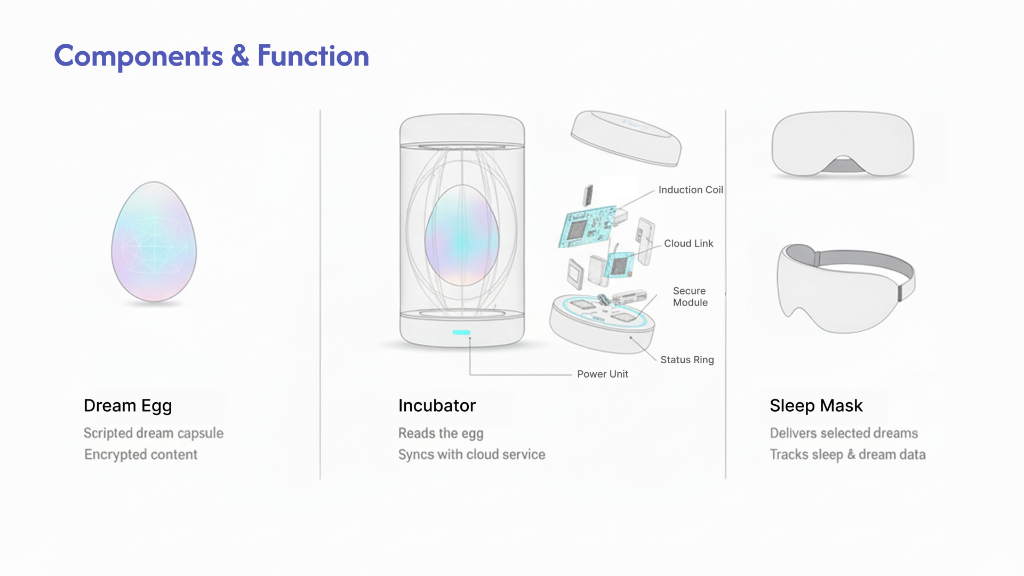
Dream Nest System is built around three core components: the Dream Egg, the Incubator, and the Sleep Mask. The Dream Egg stores encrypted dream content, the incubator reads and syncs the selected dream, and the sleep mask delivers selected dreams and tracks sleep and dream data.
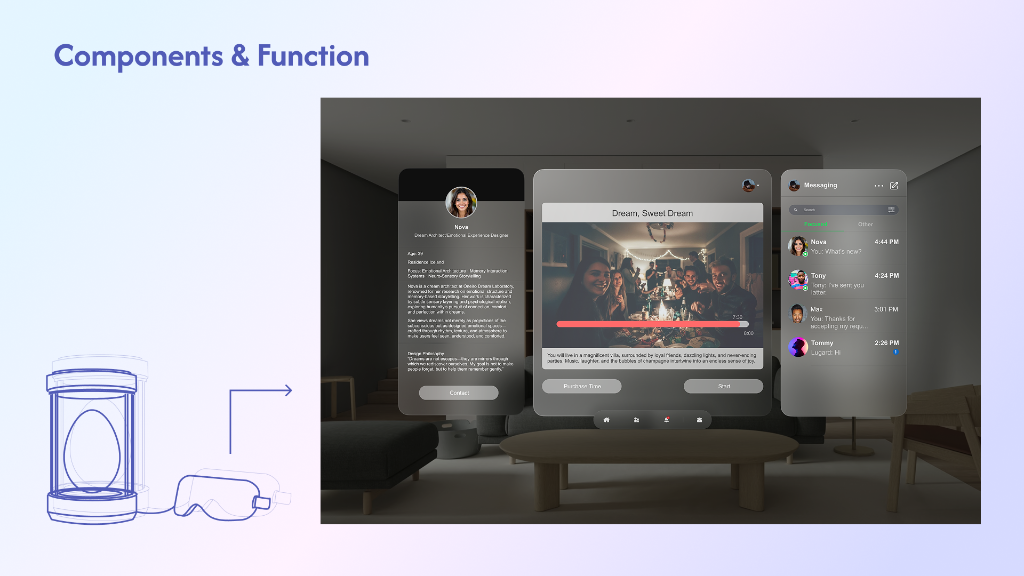
The system is presented through product visualization, component diagrams, interface mockups, retail scenarios, pricing tiers, and a physical model prototype. Together, these elements create a complete speculative ecosystem that feels believable, desirable, and slightly unsettling.
System Architecture
Interface & Interaction
Design Approach
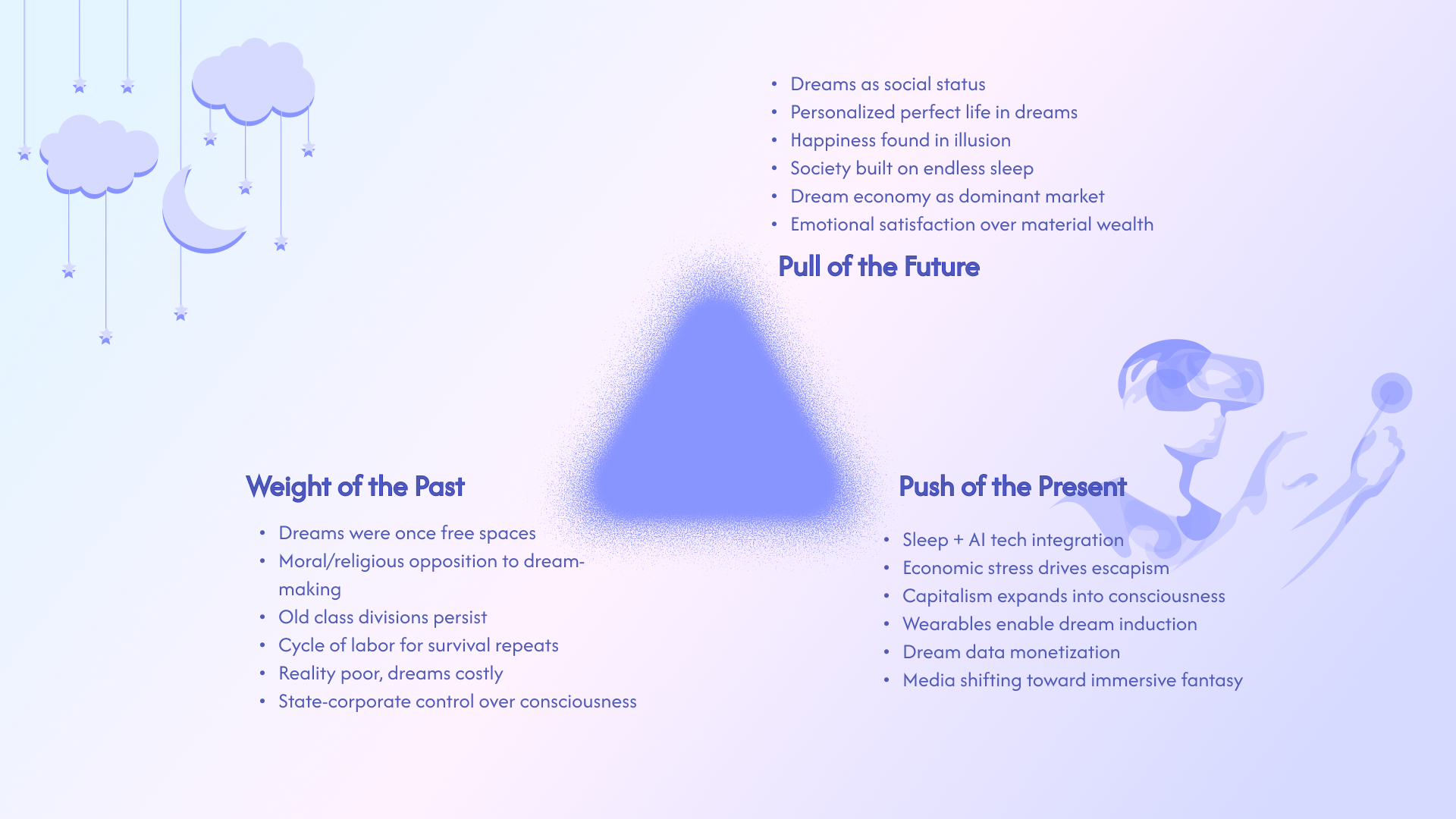
This project combines speculative storytelling with product system design. Our team used the Futures Triangle method to frame the concept from three directions: the weight of the past, the push of the present, and the pull of the future. This helped me connect dream culture, AI integration, sleep technology, economic pressure, and immersive media into one coherent future scenario.
The design process focused on making the future system feel tangible. Our team developed the product form, user scenario, interface logic, retail experience, and physical prototype to show how this fictional technology could exist in everyday life.
Key Features
Dream Egg
A scripted dream capsule that stores encrypted dream content. It makes digital dream experiences feel collectible, personal, and productized.
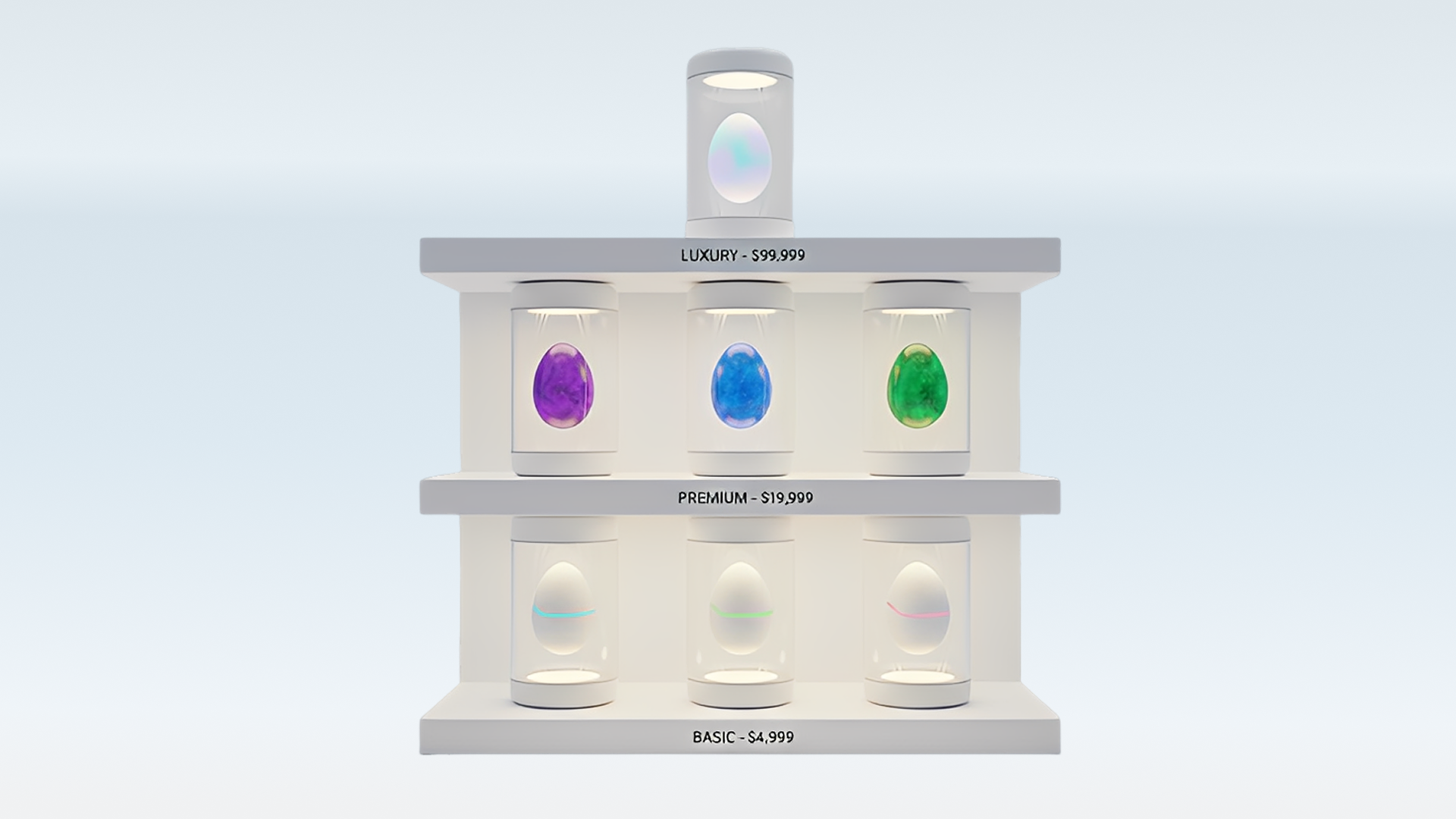
Dream Egg Pricing Tiers
| Feature | Basic ($4,999) | Premium ($19,999) | Luxury ($99,999) |
|---|---|---|---|
| Stable, pleasant dream scenes | ✓ | ✓ | ✓ |
| Core privacy and safety safeguards | ✓ | ✓ | ✓ |
| Longer dream duration per session | ✓ | ✓ | |
| Ongoing story across multiple nights | ✓ | ✓ | |
| Personalized themes from user memories | ✓ | ✓ | |
| Hyper-real, full-sensory experience | ✓ | ||
| Control over emotional intensity | ✓ |
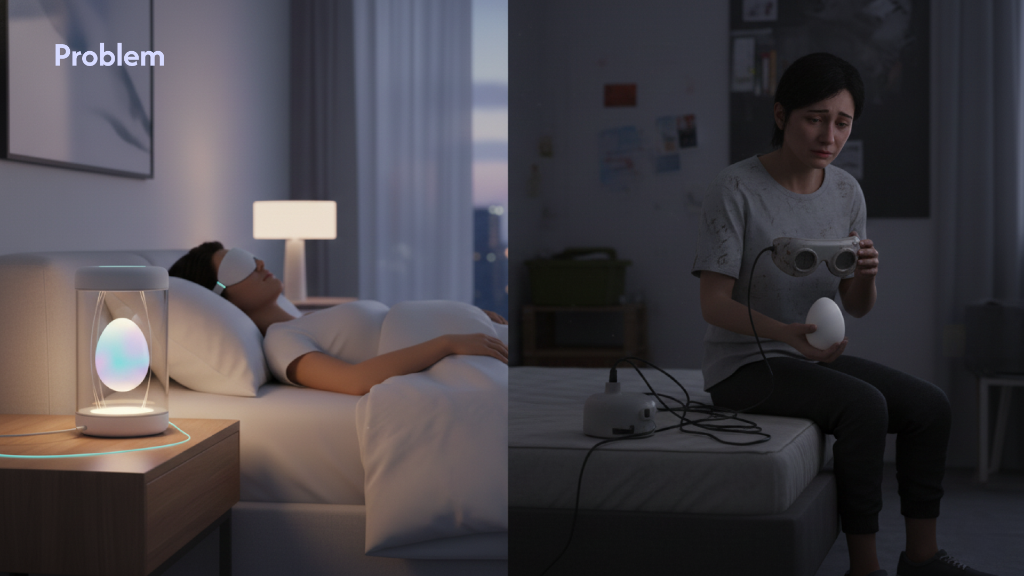
This concept serves as a critical reflection on modern escapism—contrasting the artificial comfort of purchased dreams with the harsh reality of the waking world.
Incubator
A home device that reads the Dream Egg and connects it to the cloud. It acts as the bridge between the physical object and the digital dream service.
Sleep Mask
A wearable device that delivers selected dreams and tracks sleep and dream data. It turns the user’s body into part of the system.
Physical Prototyping
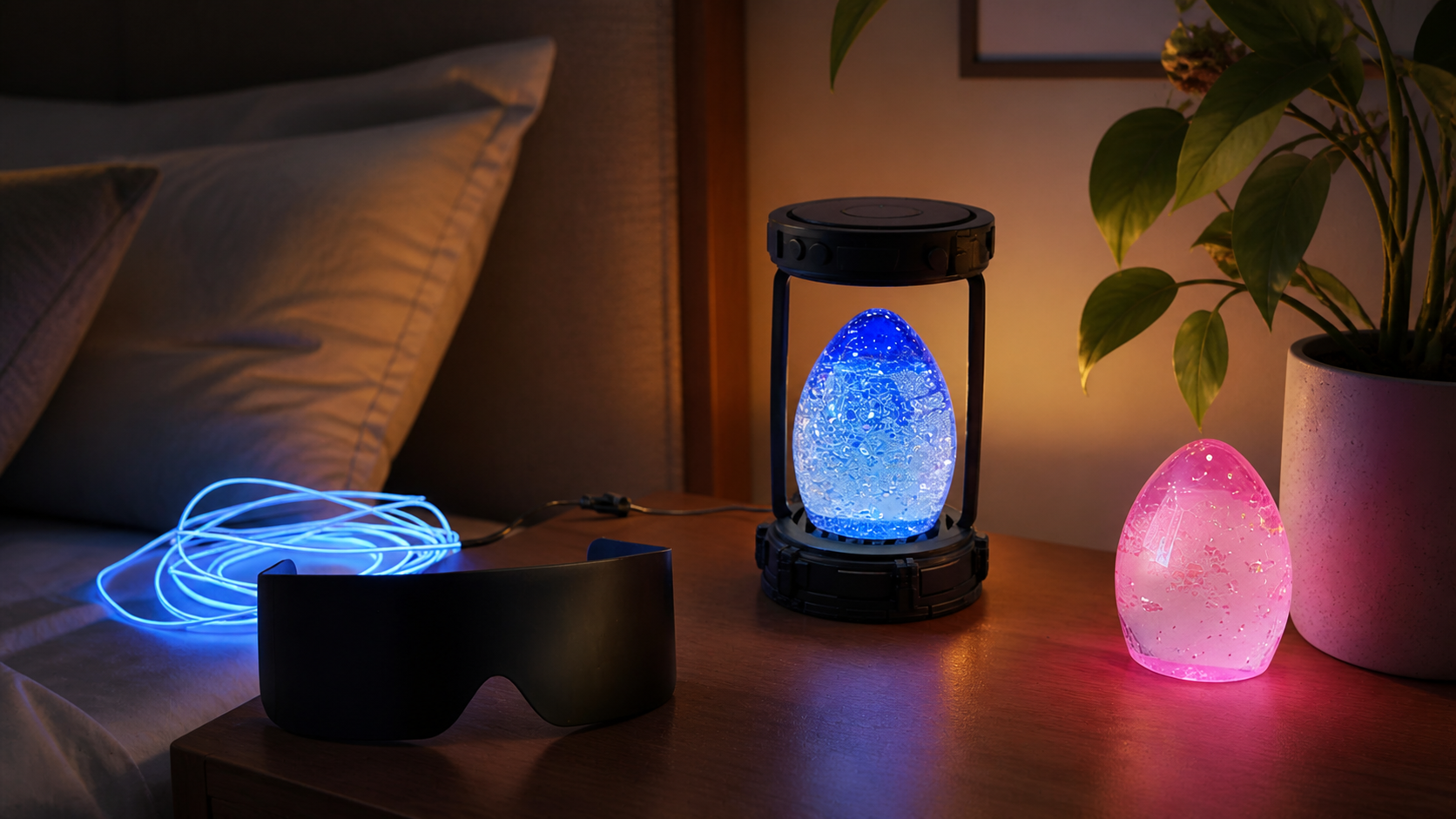
To make the speculative artifact tangible, our team created a 3D printed and resin-cast prototype. The system activates when the Dream Egg is inserted, allowing the user to select a dream through the smart mask.
What This Project Shows
This project demonstrates my ability to move beyond a single interface and think through a complete future-facing system. Through this collaborative project, I contributed to the development of the product logic, interface experience, visual storytelling, and physical prototype presentation.
It also shows my strength in connecting critical thinking with visual execution. I can use design not only to solve practical problems, but also to ask larger questions about technology, emotion, consumption, and control.
Skills Highlighted
Speculative Design
Built a future scenario around targeted dream incubation and translated it into a believable product-service ecosystem.
System Thinking
Designed the relationship between hardware, wearable device, cloud service, retail model, and user behavior.
Product Concept Design
Created a complete product family with clear functions, visual identity, user scenario, and commercial logic.
UI/UX Design
Designed interface moments that show dream selection, user profile, saved dreams, and system interaction.
Physical Prototyping
Contributed to a 3D printed and resin-cast prototype that made the speculative artifact tangible.
Visual Storytelling
Used atmosphere, product rendering, diagrams, and scenario images to communicate a future world clearly and emotionally.